
Overview
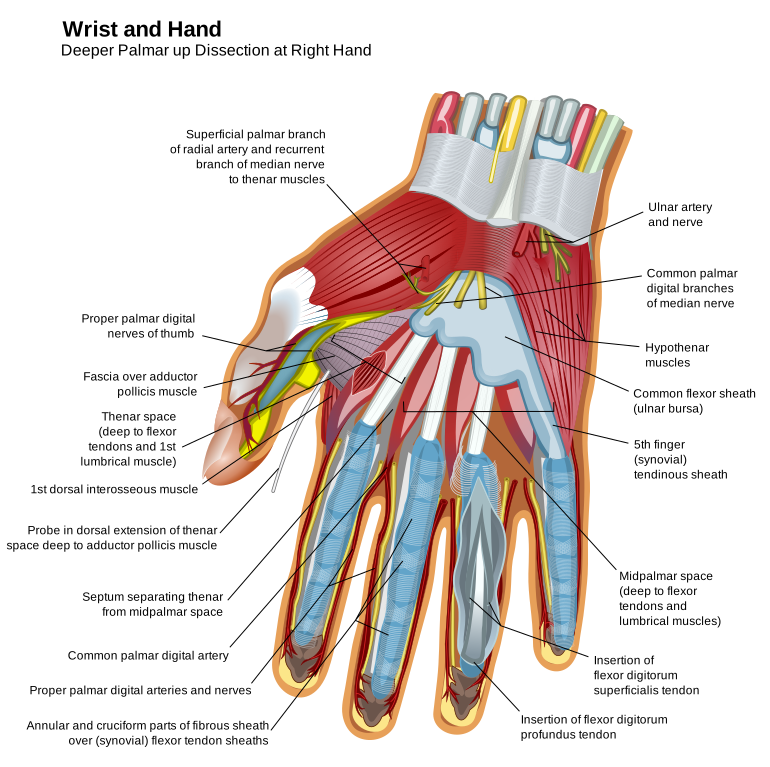
Metacarpals are the long bones of the hand between the wrist and the fingers. Many metacarpal fractures — especially boxer's fractures of the fifth metacarpal neck — heal well with a short period of immobilization. Surgery is considered when alignment cannot be held, when the fracture rotates the finger, or when multiple bones are involved.
The most important clinical finding is rotational alignment: when the fingers are flexed, they should all point toward the scaphoid. Any rotational malalignment is a strong indication for surgical correction regardless of the X-ray angle.
Why it's done
Metacarpal ORIF is typically considered when imaging and the clinical picture together indicate that the fracture will not reliably heal or function without surgical stabilization. Common indications include:
Rotational malalignment
Crossover or scissoring of the finger during flexion.
Significant angulation or shortening
Beyond accepted limits for the specific metacarpal.
Open fracture
Urgent surgical irrigation and stabilization.
Intra-articular fracture
Step-off at a knuckle joint requires reduction.
Multiple metacarpal fractures
Loss of the hand's stable arch justifies operative fixation.
How it works
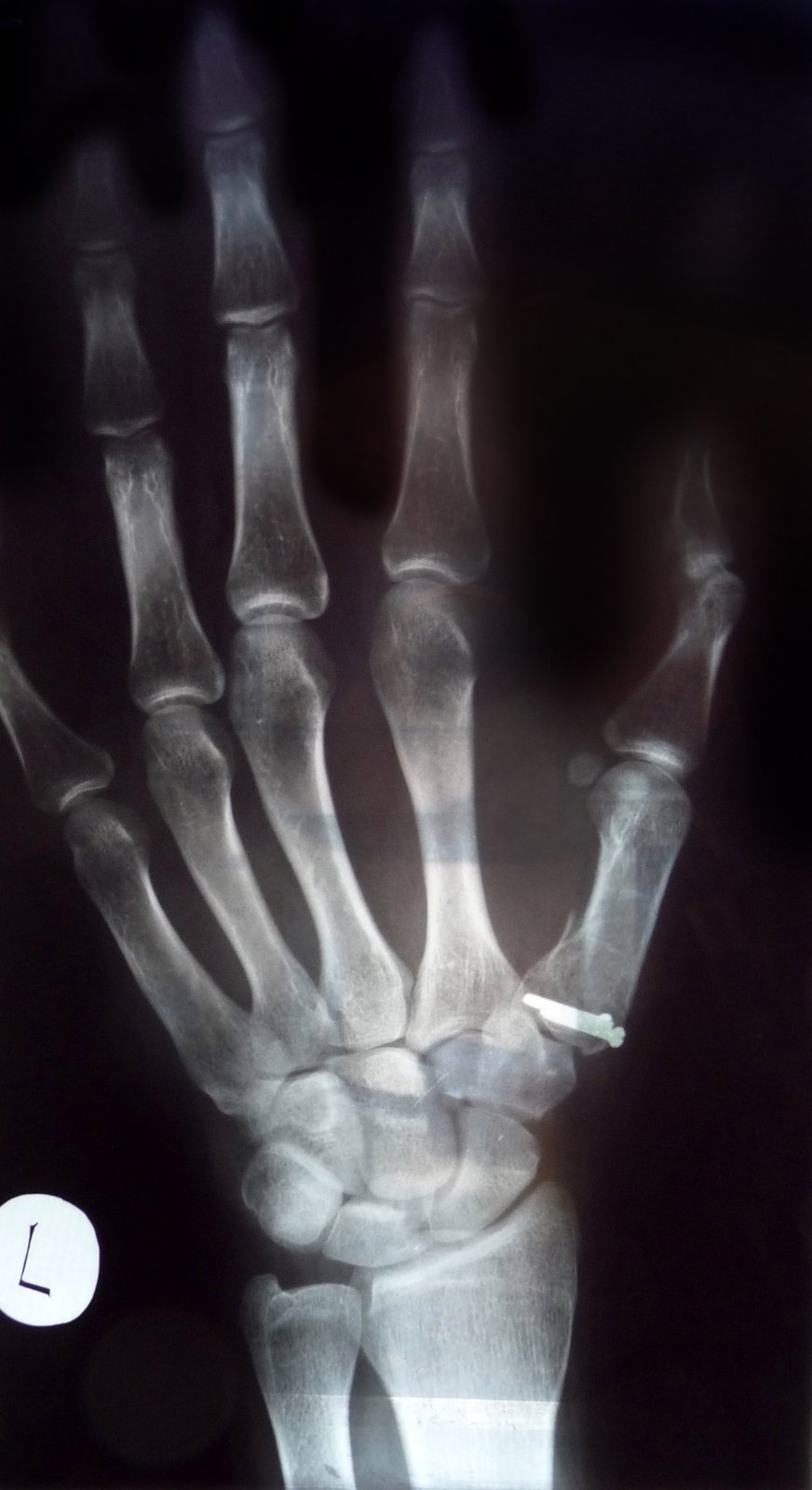
Options include percutaneous pinning with smooth K-wires, intramedullary screw or nail techniques, and formal open plate-and-screw fixation. The choice depends on fracture location, comminution, and surgeon preference.
For shaft fractures, a small dorsal incision exposes the bone; a low-profile plate is applied and secured with screws. Pin fixation is often performed percutaneously under fluoroscopy with a small stab incision.
Recovery
The hand is protected in a splint for the first week or two, with finger motion started early to prevent stiffness. Hand therapy is important. Pin removal, when pins are used, is usually at four to six weeks in the clinic. Full strength returns by three months. Stiffness and tendon adhesion are the most common complications.
Contact
For questions about this procedure or to schedule an evaluation, call the office at (830) 625-0009 or request an appointment online.
Further Reading
External patient-education references and related OSI pages for additional background: