
Overview
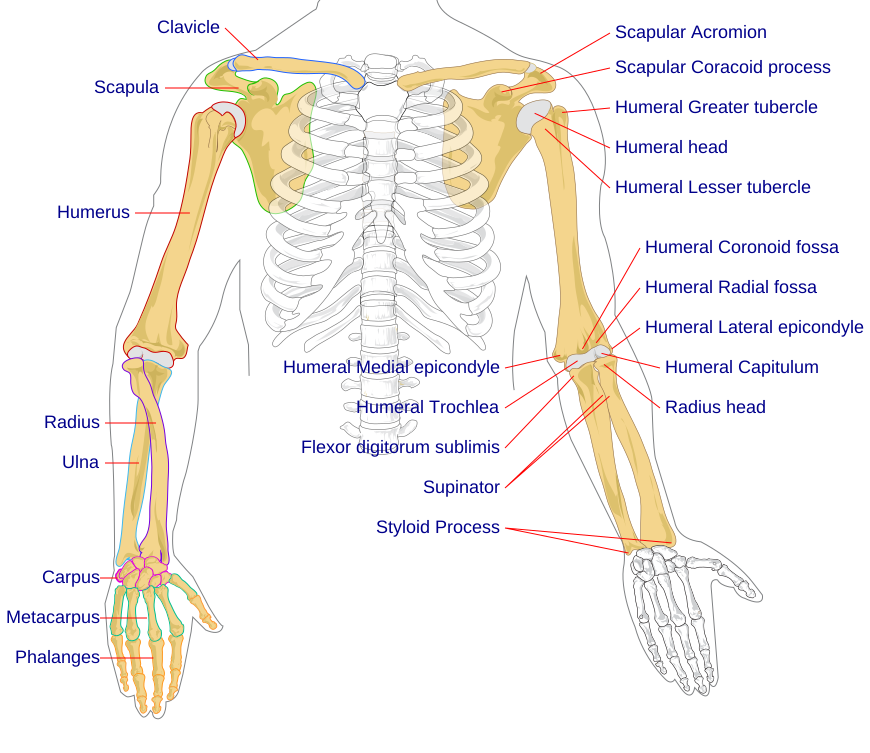
Lateral epicondylitis — tennis elbow — is a degenerative process in the common extensor tendon origin at the lateral elbow, not a true inflammatory tendinitis. Most cases resolve within 6–12 months with a combination of rest, therapy, bracing, and occasional injection. When symptoms persist despite that full course, the diseased portion of the tendon can be removed.
How the Procedure Works
We open the common extensor fascia just anterior to the lateral epicondyle and identify the ECRB origin — it sits deep to the more superficial extensor carpi radialis longus and is the tendon almost universally involved in lateral epicondylitis. The pathologic tissue is visually distinct from healthy tendon: gray, friable, hypervascular rather than the white, glistening normal. We excise that degenerative zone back to healthy-appearing tendon, decorticate the epicondyle to invite a fresh healing response, and repair the remaining tendon back to bone. The radial nerve's deep branch (posterior interosseous nerve) passes through the radial tunnel just anterior and distal to the operative field; we stay posterior to the lateral collateral ligament complex and work within the safe zone to protect it.
When to Consider Tennis Elbow Debridement
Tennis elbow debridement is generally offered when symptoms, imaging, and a trial of non-operative care together point to surgery as the next step. The typical picture includes:
Persistent lateral epicondylitis
Symptoms that have persisted for 6–12 months or longer despite a full course of non-operative care.
Failed conservative care
Therapy, counterforce bracing, and one or more steroid or other injections without lasting relief.
Functional limitation
Pain that limits gripping, lifting, or work demands.
Conditions This Treats
Physicians Who Perform Tennis Elbow Debridement


David B. Templin, M.D.

Trent Twitero, M.D.
Providers Who Surgically Assist with Tennis Elbow Debridement

Sydney Georg, PA-C

Ben Swanner, PA-C
Further Reading
External patient-education references and related OSI pages for additional background: