
Overview
what it is and why it matters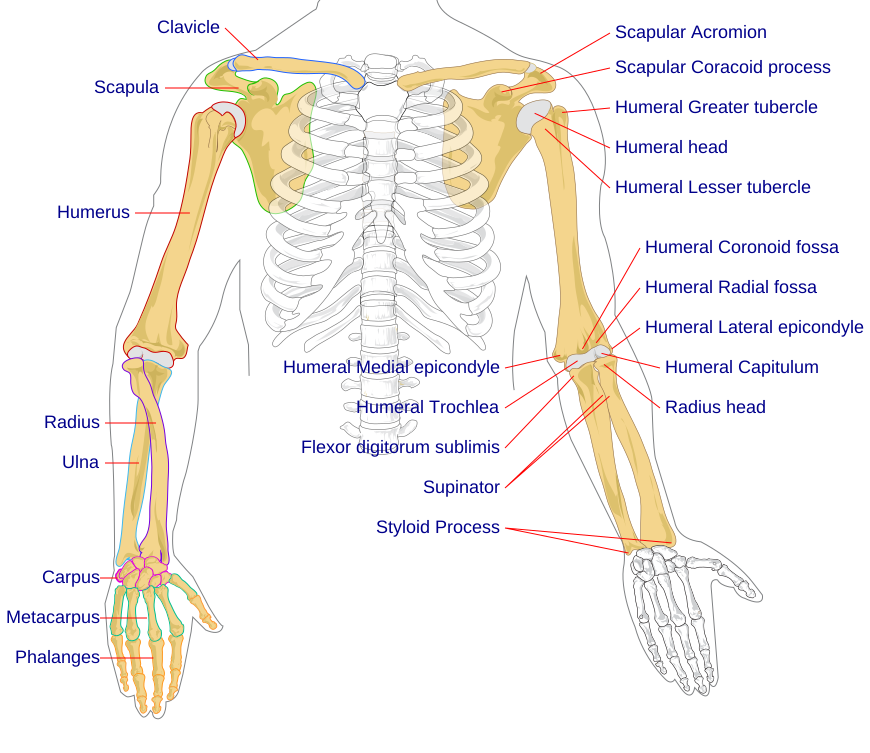
Distal humerus fractures occur at the articular end of the humerus, involving the medial and lateral columns and the trochlea-capitellum articular surface. They result from high-energy trauma in younger patients (falls from height, sports collisions) or from low-energy falls in osteoporotic elderly patients. They are complex to manage because the articular surface must be precisely reconstructed and the elbow is unforgiving of stiffness — requiring stable fixation that allows early motion.
Diagnosis
exam first, imaging secondElbow pain and swelling with inability to use the arm after significant trauma. AP and lateral X-rays. CT with 3D reconstruction is essential for preoperative planning of operative cases.
Treatment Path
how care progresses at OSI1
Non-operative management
For minimally displaced fractures in non-ambulatory patients or those with prohibitive surgical risk — a "bag of bones" technique accepting moderate malunion while focusing on early motion.
Surgical Options at OSI
if non-operative care isn't enoughMost displaced distal humerus fractures require surgical fixation to restore the articular surface and allow early motion.
Providers Who Treat Distal Humerus Fracture
sports-medicine team

David B. Templin, M.D.

Trent Twitero, M.D.
Further Reading
authoritative sourcesExternal patient-education references and related OSI pages for additional background: