
Overview
what it is and why it matters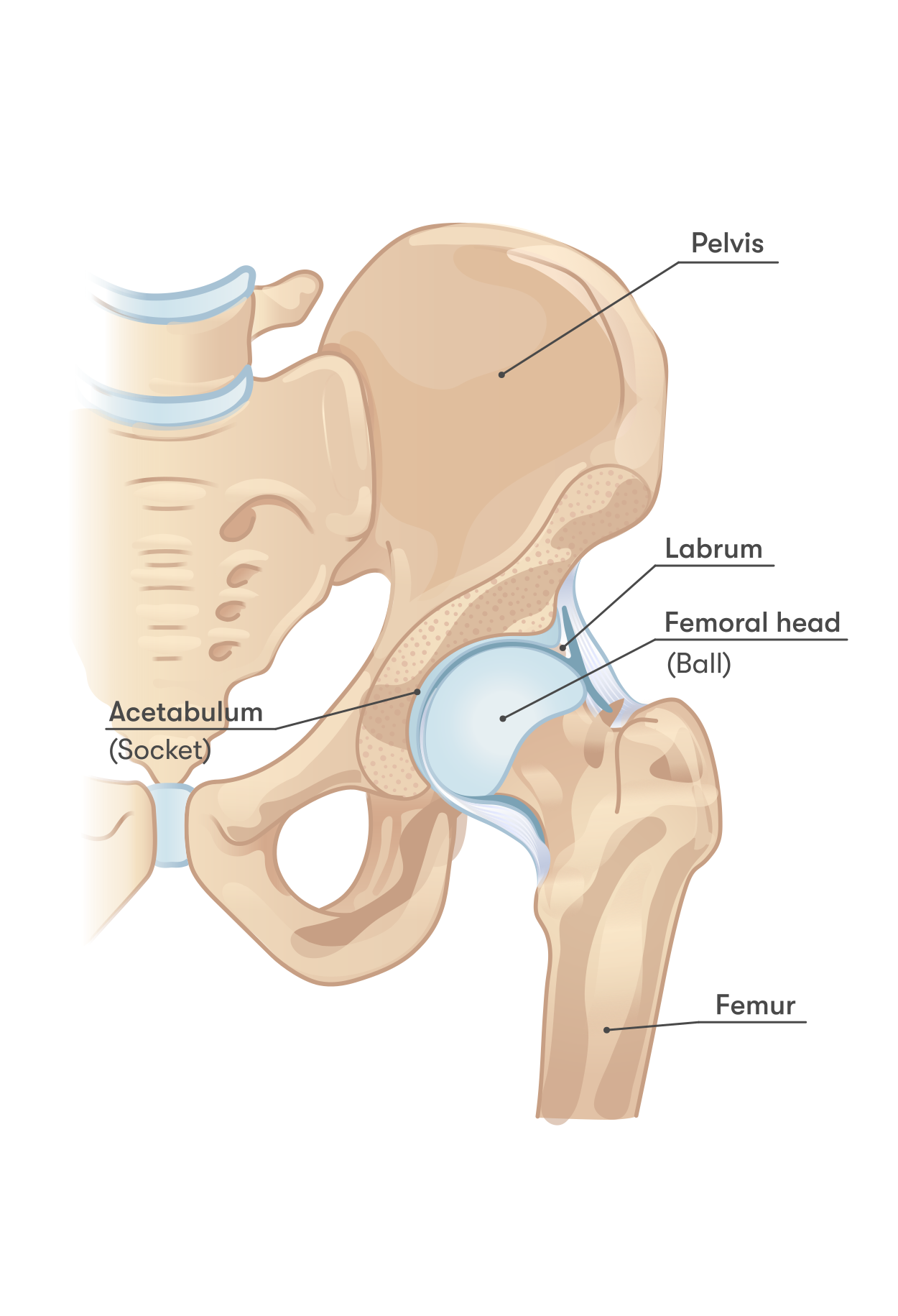
The labrum is a ring of fibrocartilage attached to the rim of the acetabulum (socket). It deepens the socket, distributes contact stress, and acts as a seal that keeps synovial fluid inside the joint. When the labrum tears — most often from FAI, trauma, or repetitive hip motion in athletes — the joint loses some of its shock absorption and fluid-film lubrication. Pain and mechanical symptoms follow.
Labral tears are common in dancers, hockey players, soccer players, and golfers. They also occur with acute trauma such as hip dislocation or falls. Many labral tears co-exist with femoroacetabular impingement.
Diagnosis
exam first, imaging secondClassic symptoms are deep groin pain, clicking or locking sensations, and pain at the end of hip range of motion. The FADIR test is typically positive. MR arthrography is the most sensitive imaging study — the contrast dye infiltrates the tear and makes it visible. Plain X-rays are taken to evaluate for FAI anatomy or early arthritis.
Treatment Path
how care progresses at OSI1
Activity modification
Avoiding provocative positions — deep squatting, end-range hip rotation — while the acute inflammation settles.
2
Physical therapy
Hip stabilizer strengthening reduces the dynamic impingement forces that stress the labrum.
3
NSAIDs
Oral or topical anti-inflammatories reduce the inflammatory component of labral pain.
Intra-articular corticosteroid injection
Guided injection into the hip joint addresses acute inflammatory flares and confirms the hip as the pain source.
Surgical Options at OSI
if non-operative care isn't enoughSurgery is considered when mechanical symptoms (locking, catching) are present, MRI shows a discrete tear, and pain persists despite a thorough course of non-operative care.
Providers Who Treat Hip Labral Tear
sports-medicine team

David B. Templin, M.D.

Trent Twitero, M.D.
Further Reading
authoritative sourcesExternal patient-education references and related OSI pages for additional background: